Contemporary Digital Technologies of Media Communication in Social Media: A Typological Classification
DOI:
https://doi.org/10.17721/CIMC.2025.38.55-68Keywords:
social media, modern digital technologies, new information technologies, social networks, streaming platformsAbstract
The study examines the latest communication technologies of the digital age, which are changing the ways and effectiveness of conveying information to the media audience. Scientific literature shows fragmentation in defining the boundaries, terminology, and classification of means of conveying information in the digital age, which necessitates a unified approach to analyzing the latest communication practices. The purpose of this article is to review existing research on contemporary technologies in mass communication, to classify the latest technologies for conveying information in the digital environment and to identify the key vectors of their application in the context of mass communication. The authors consider social media, streaming services, and the latest television, some advertising platforms, automatic translation tools, analytics, and crowdsourcing platforms as part of the latest communication technologies. The methodology is based on theoretical analysis, content analysis, typological, and comparative methods. The study proposes a typological structure of the contemporary communication technologies based on the following criteria: communication format, degree of automation, role of the audience, nature of personalization, and algorithmic control. The results of the study can be applied in future detailed studies on the development of media management, information policy, and digital security strategies. They also contribute to the formation of a scientific basis for further research in media communications in the context of the modern digital transformations.
Downloads
References
Afuah, A., & Tucci, C. (2012). Crowdsourcing as a solution to distant search. Academy of Management Review, 37, 355–375. https://doi.org/10.5465/AMR.2010.0146.
Amazon Mechanical Turk. (n.d.). Amazon Mechanical Turk. Retrieved April 26, 2025, from https://www.mturk.com/.
Baker, N. (2024, July 17). What is on-demand TV? Uswitch. Retrieved from https://www.uswitch.com/tv/guides/what-is-on-demand-tv/.
Beudaert, X., Argandoña, J., Loc’h, J., Bediaga, I., & Munoa, J. (2019). Monitoring and analytics platform for machine tools. https://hal.science/hal-01901110/document
Bondar, Y. (2018). Information and publishing in the context of socio-political transformations. Scientific and Information Bulletin of the Academy of Sciences of Higher Education of Ukraine, 1(103), 13–16. Retrieved from http://nanvou.org.ua/Publications/visnuku/Вісник%202018%20№1%20ННН.pdf#page=13.
Chalaby, J. K. (2024). The streaming industry and the platform economy: An analysis. Media, Culture & Society, 46(3), 552–571. https://doi.org/10.1177/01634437231210439.
Chandrasekaran, V. (2025). Machine learning in Adtech: Transforming digital advertising. International Journal of Computer Engineering and Technology, 16(1), 567–577. https://doi.org/10.34218/IJCET_16_01_048.
Foxman, M., Harris, B. C., & Partin, W. C. (2024). Recasting Twitch: Livestreaming, Platforms, and New Frontiers in Digital Journalism. Digital Journalism, 12(4), 516–536. https://doi.org/10.1080/21670811.2024.2329648.
Goulart, K. (n.d.). Social network. TechTarget. Retrieved April 25, 2025, from https://www.techtarget.com/searchcio/definition/social-network.
Goodman, J., & Paolacci, G. (2017). Crowdsourcing consumer research. Journal of Consumer Research, 44, 196–210. https://doi.org/10.1093/JCR/UCX047.
Haidak, O. (2024, March 29). Yak suchasni formaty telebachennia zminiuiut telereklamu: Osnovni kharakterystyky CTV i OTT reklamy [How modern TV formats are changing television advertising: Key features of CTV and OTT advertising]. Webpromo. Retrieved from https://web-promo.ua/ua/blog/yak-suchasni-formati-telebachennya-zminyuyut-telereklamu-osnovni-harakteristiki-ctv-i-ott-reklami/.
Havrylets, Yu., & Rizun, V. (2024). Mediaefekty: istorychnyj pohliad [Media effects: A historical perspective]. Navchalʹnyj posibnyk z dystsypliny «Fundamentalʹna fakhova pidhotovka», modulʹ «Teoriia masovoi komunikatsii» [Textbook for the course “Fundamental Professional Training”, module “Theory of Mass Communication”]. Kyiv: Kyïvsʹkyj natsionalʹnyj universytet imeni Tarasa Shevchenka. Retrieved from https://www.researchgate.net/publication/380000932_Mediaefekti_istoricnij_poglad#fullTextFileContent.
Hammon, L., & Hippner, H. (2012). Crowdsourcing. Business & Information Systems Engineering, 4, 163–166. https://doi.org/10.1007/s12599-012-0215-7.
Horodenko, L., & Shtelmakh, P. (2024). History and evolution of international broadcasting systems in the world. Current Issues of Mass Communication, 35, 12–21. https://doi.org/10.17721/CIMC.2024.35.12-21.
Jiao, H., Wang, T., Libaers, D., Yang, J., & Hu, L. (2025). The relationship between digital technologies and innovation: A review, critique, and research agenda. Journal of Innovation & Knowledge, 10, Article 100638. https://doi.org/10.1016/j.jik.2025.100638.
Karyukin, V., Mutanov, G., Mamykova, Z., Nassimova, G., Torekul, S., Sundetova, Z., & Negri, M. (2021). On the development of an information system for monitoring user opinion and its role for the public. Journal of Big Data, 9. https://doi.org/10.1186/s40537-022-00660-w.
Koukaras, P., Tjortjis, C., & Rousidis, D. (2020). Social media types: Introducing a data-driven taxonomy. Computing. https://doi.org/10.1007/s00607-019-00739-y.
McQuail, D. (2010). McQuail’s mass communication theory (6th ed.). SAGE Publications. Retrieved from https://www.academia.edu/36441695/McQuails_Mass_Communication_Theory.
Mercan, H., Akgün, Y., & Odacıoğlu, M. C. (2024). Makine çevirisinin tarihsel süreci [The historical process of machine translation]. International Journal of Language and Translation Studies, 4(1), 104–116. Retrieved from https://www.researchgate.net/publication/381916795_The_Evolution_of_Machine_Translation_A_Review_Study.
PayPro Global. (2024, September 29). Що таке соціальний доказ у SaaS? Retrieved April 26, 2025, from https://payproglobal.com/uk/%D0%B2%D1%96%D0%B4%D0%BF%D0%BE%D0%B2%D1%96%D0%B4%D1%96/%D1%89%D0%BE-%D1%82%D0%B0%D0%BA%D0%B5-%D1%81%D0%BE%D1%86%D1%96%D0%B0%D0%BB%D1%8C%D0%BD%D0%B5-%D1%81%D1%85%D0%B2%D0%B0%D0%BB%D0%B5%D0%BD%D0%BD%D1%8F-%D0%B2-saas/.
Pippit.ai. (2025). What Is AdTech? Understanding the Basics of Digital Advertising. Pippit AI. https://www.pippit.ai/resource/what-is-adtech.
Rauschnabel, P., Felix, R., & Hinsch, C. (2019). Augmented reality marketing: How mobile AR-apps can improve brands through inspiration. Journal of Retailing and Consumer Services. https://doi.org/10.1016/J.JRETCONSER.2019.03.004.
Segev, E. (2020). Crowdsourcing contests. European Journal of Operational Research, 281, 241–255. https://doi.org/10.1016/j.ejor.2019.02.057.
Zakharchenko, A. P. (2023). Konverhovani vplyvy v systemi mediakomunikatsii: Teoriia, vymiriuvannia ta prohnozuvannia [Doctoral dissertation, Taras Shevchenko National University of Kyiv]. https://scc.knu.ua/components/com_chronoforms7/chronoforms/uploads/335875/%D0%97%D0%B0%D1%85%D0%B0%D1%80%D1%87%D0%B5%D0%BD%D0%BA%D0%BE_%D0%B4%D0%BE%D0%BA%D1%82%D0%BE%D1%80%D1%81%D1%8C%D0%BA%D0%B0%20%D1%80%D0%BE%D0%B1%D0%BE%D1%82%D0%B0.pdf.
Downloads
Published
Data Availability Statement
Data are available from the corresponding author upon reasonable request.
Issue
Section
Categories
License
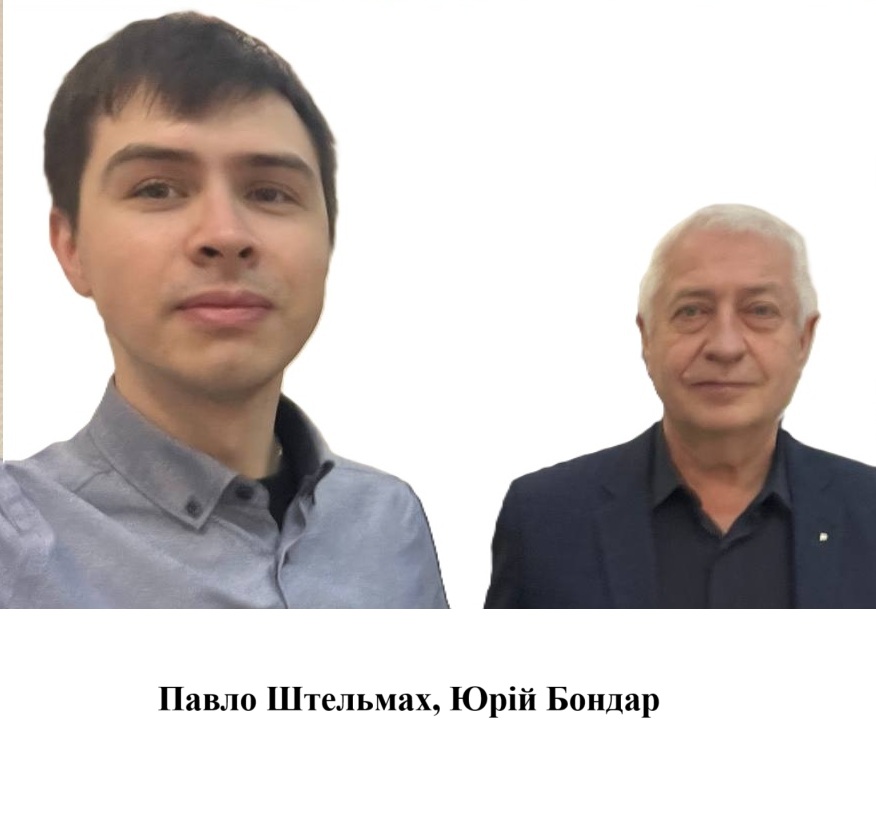
Copyright (c) 2025 Юрій Бондар, Павло Штельмах

This work is licensed under a Creative Commons Attribution 4.0 International License.
Authors published in this journal agree to the following terms:
a. Authors reserve the right to author their work and transfer to the journal the right to first publish this work under the CC BY 4.0 license, which allows others to freely distribute the published work with mandatory reference to the authors of the original work and the first publication in this journal.
b. Authors have the right to enter into independent additional agreements on non-exclusive distribution of the work in the form in which it was published in this journal (for example, to place the work in the electronic repository or publish in a monograph), provided that the link to the first publication in this journal.
c. The journal's policy allows and encourages authors to post manuscripts on the Internet (for example, in repositories or on personal websites) both before the submission of this manuscript and during its editorial processing, as it promotes productive scientific discussion and has a positive impact. on the efficiency and dynamics of citing published work.